Managers and team leads
A practical task approval workflow for growing teams
When a team grows, work often becomes hard to follow for a simple reason: the brief, the latest file, and the approval decision live in different places. A small, consistent workflow makes ownership and next steps visible without adding another meeting.
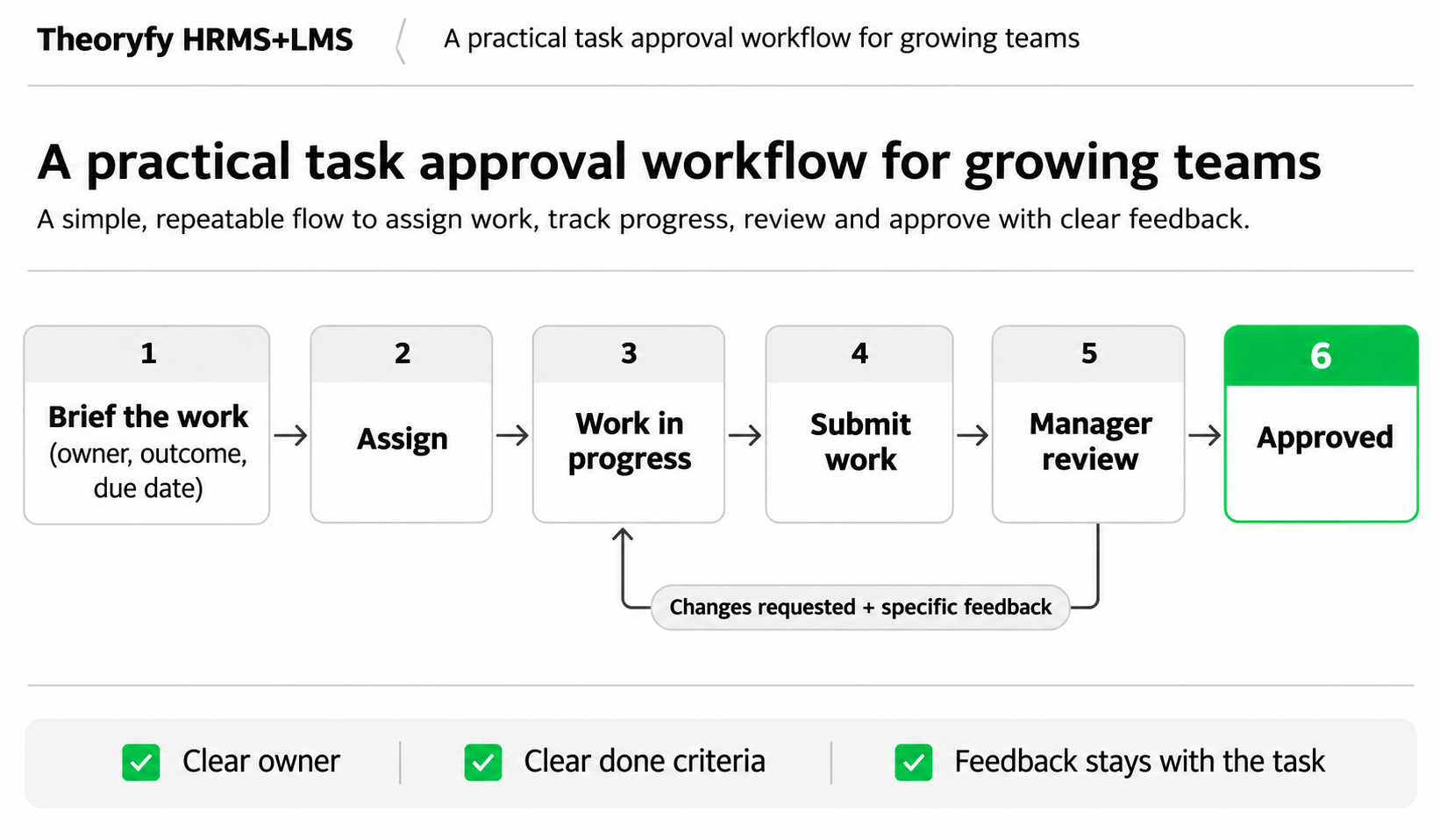
1. Start with a brief people can act on
A useful task brief names one accountable owner, the outcome expected, a due date, and the evidence that will show the work is complete. Add context and links that the assignee needs at the start. Avoid assigning a vague activity such as “work on social” without defining the deliverable.
For a multi-part deliverable, use a parent task for the shared outcome and child tasks for independently reviewable pieces. Keep the hierarchy shallow enough that the team can scan it.
2. Make work states mean one thing
Agree on a short set of states: To Do, In Progress, Submitted, Under Review, Approved, and Reverted. “Submitted” means the assignee believes the work is ready. “Approved” means the reviewer has accepted it. Avoid using one state to mean both.
A state change should answer: who owns the next action? If the answer is unclear, the workflow needs another explicit step or a clearer handoff.
3. Ask reviewers to give specific feedback
A review should compare the submission with the original outcome and completion criteria. If changes are needed, identify the exact part, explain what needs to change, and say how the assignee can confirm the revision is complete. Keep the request attached to the task so the next review has the same context.
When work meets the brief, record approval and any useful note. A visible history helps the team understand what changed and when the work was accepted.
4. Use a short repeatable review routine
Set a predictable time for managers to review submitted work. During the review, handle the oldest or most time-sensitive submissions first, assign each decision to one reviewer, and leave a clear next step. Track returned work until it is resubmitted or the owner updates its scope.
The goal is not to add status updates for their own sake. A board or task outline is useful when it reduces the effort required to find the owner, deliverable, due date, current state, and latest decision.
A task brief checklist
- One accountable owner
- A specific outcome and due date
- Completion criteria the reviewer can check
- Submission evidence attached to the task
- A clear approval or revision decision
A task system works best when the brief, submission, review, and final decision stay connected. Theorify brings assigned work and approval history alongside employee operations and learning.