HR and operations leads
An attendance tracking checklist for distributed teams
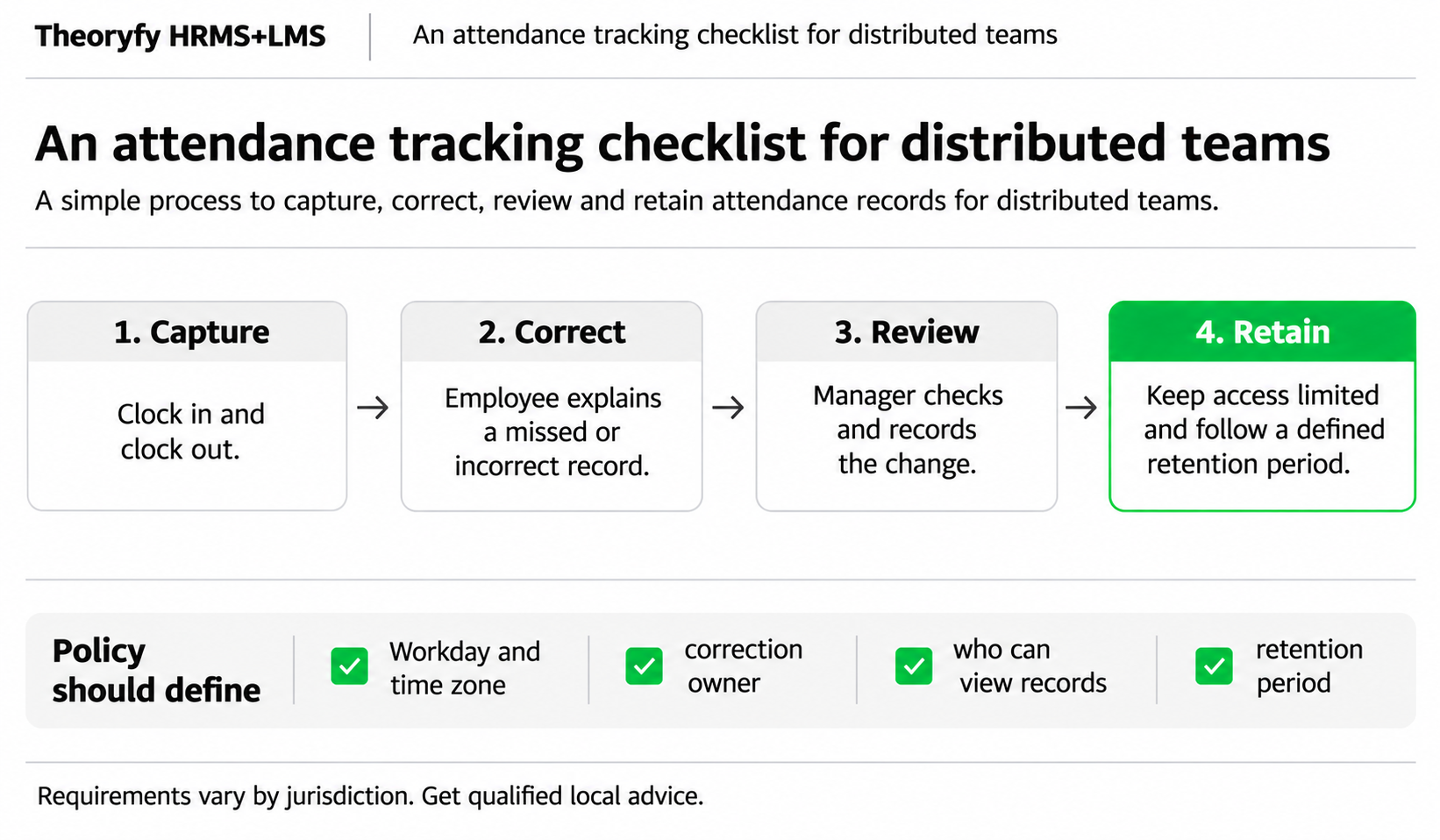
An attendance record should help an employee and manager answer the same questions: which workday is this, when did work begin and end, and how is a correction handled? A written process is especially useful when people work from different locations or time zones.
Choose the record you actually need
Define whether your organization records clock-in and clock-out times, total work hours, scheduled shifts, or a combination. Explain which roles use the process and who can review or correct a record. Collect only the information needed to operate the policy.
A basic attendance process does not require collecting location or biometric data. If you consider additional monitoring, review necessity, employee notice, access, retention, and applicable privacy obligations first.
Make dates and local time understandable
People should see attendance on the correct local workday and understand which time zone is being used. For distributed teams, define whether each employee follows their work location, a scheduled shift location, or another documented rule. Keep a consistent source of truth for stored timestamps and make local display behavior explicit.
If a shift crosses midnight, state which workday owns the record and how the total is calculated. Do not leave this to employees to infer from a timestamp.
Create a correction path
Describe how an employee reports a missed or incorrect punch, what details to provide, and who reviews the change. Record the original value, corrected value, reason, reviewer, and time of change in an audit history. A correction process should be easy to find and should not require an employee to ask around for the right person.
Set a reasonable review cadence for managers and a way for employees to confirm that the correction was completed.
Write down access and retention rules
Tell employees who can view their own history and which managers can view team records. Specify a retention period that matches your organization’s obligations and operational need. Limit exports and keep records accessible to only the people who need them.
Employment and working-time requirements vary by jurisdiction and can change. This checklist is general operational guidance, not legal advice. Have qualified local advisers review the policy for every country or state where your organization operates.
A policy outline to adapt
- Purpose and roles covered
- What an employee records and when
- The time zone and workday rule
- How missed punches and corrections are reviewed
- Who may access records and how long they are retained
- Where employees can ask questions
A clear attendance history pairs the record with a straightforward correction and review process. Theorify is designed to keep attendance and leave alongside employee profiles and day-to-day work.